
If you’ve ever sat in your captain’s chair during a summer storm only to feel a cold drip land right on your shoulder, you know that sinking feeling. Your next thought isn’t about the weather; it’s about your bank account. You’re likely wondering if you’re looking at a quick patch job or a total financial disaster.
The truth is, the gap between a DIY fix and a shop replacement is massive. We’re talking the difference between a minor weekend project and the price of a small car. By using top-quality materials, you can usually sidestep the heavy “dealership tax” and get a roof that actually outlasts the factory membrane.
The Economic Cost of Professional Replacement vs. DIY RV Rubber Roof Sealant
Let’s look at the reality of the service center. If you drop your rig off for a full tear-off, they aren’t just charging you for the materials. You’re paying for the grueling hours of labor it takes to strip off AC units, scrape away decade-old sealant, and peel back the first membrane.
Shops typically charge by the linear foot, and those costs pile up fast before they even factor in the price of new EPDM or TPO. If they find “soft spots” or water damage in the wood decking underneath, those estimates can double overnight. For many owners, that kind of bill is enough to make them want to sell the rig “as-is” and walk away from the lifestyle entirely.
Why RV Roof Magic is the Best Sealant for RV Roof Restoration
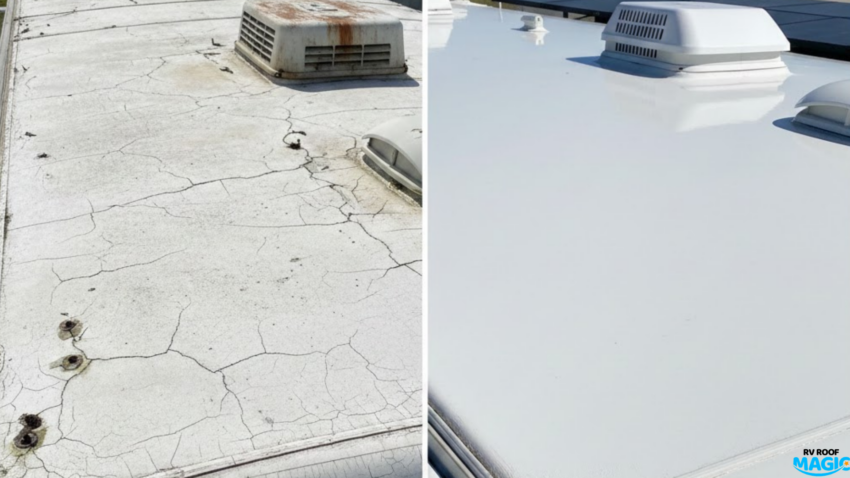
Unless your roof is physically falling through the ceiling, you probably don’t need a new one. What you really need is a new, chemical-grade seal. This is where choosing the protection makes the most sense.
By choosing rv rubber coatings, you’re cutting out the middleman and the specialized labor costs. Instead of a massive shop invoice, you’re looking at a manageable DIY project that provides a commercial-grade finish. Because it’s a one-coat system that doesn’t require a primer, you aren’t spending all day (or extra money) waiting for multiple layers to dry.
Why You Should Choose a Solvent-Based RV Rubber Roof Sealant
There are plenty of cheap “coatings” at the local hardware store, but they’re usually water-based acrylics. In the RV world, those are a nightmare. They can’t handle ponding water, and they tend to peel off like a bad sunburn after one season of travel.
Using a dedicated is different because it’s a solvent-based, moisture-cure product. It doesn’t just sit on top of your roof; it chemically bonds – or cross-links – to the old surface, becoming a permanent part of the substrate.
Why this is a better investment:
- Rapid Waterproofing: It can deal with unexpected rain in just a few hours. No more staring at the weather app with anxiety.
- Thermal Protection: It turns your roof into a reflective shield, helping your AC run more efficiently and reducing your long-term energy usage.
- Simple Application: Most professional-grade systems require a separate primer coat. RV Roof Magic is formulated to grab onto your roof on the first pass, helping you save time and effort.
Save More by Using the Best Sealant for RV Roof Protection
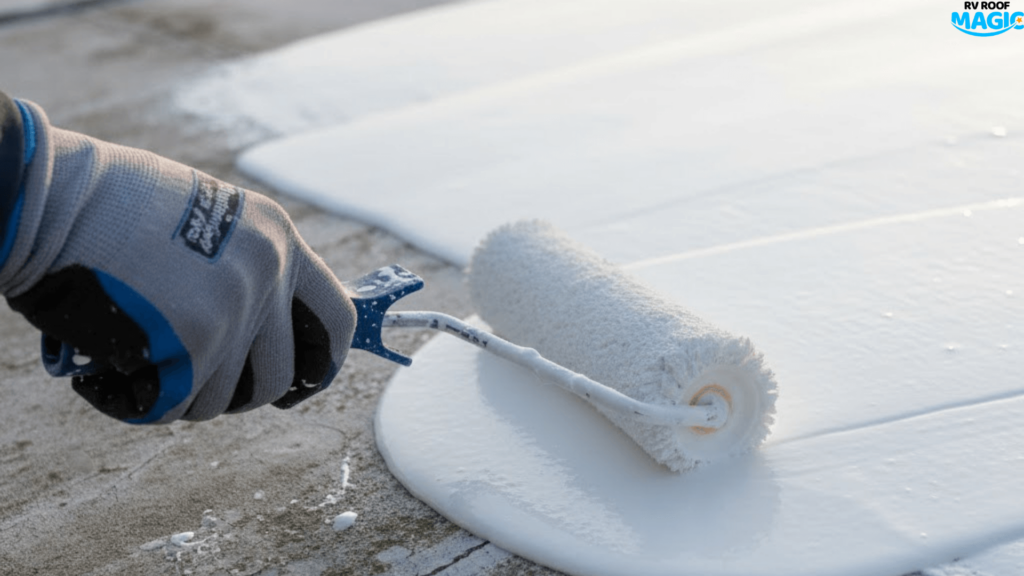
I get asked all the time if a “regular person” can really do this. The answer is a hard yes. If you can use a paint roller, you can restore your roof.
To figure out your needs, measure your roof’s length and width. Since one gallon covers about 50 square feet, most standard campers only need a few pails to get the job done. If you prep the surface correctly with a dedicated cleaner to remove the dirt and oils, you’re basically giving your rig a brand-new roof for a fraction of the cost of a replacement.
When to Call the Pros (And When to Walk Away)
Look, I love a good DIY project, but I’m also a realist. You should only consider a full professional replacement if:
- The roof feels like a trampoline (indicating structural wood rot).
- You see black mold expanding across your interior ceiling panels.
- The actual metal or wood frame is warped or compromised.
If the structure is solid but the leaks are driving you crazy, the best sealant for RV roof maintenance is a liquid membrane. It fills in the pinholes, seals the seams around your vents, and gives you a 20-year warranty without the dealership headache.
The Bottom Line on RV Rubber Coatings
Don’t let a service center convince you that a few leaks mean the end of your RV. By applying yourself, you’re saving yourself a massive bill and getting a roof that’s actually tougher than the factory roof.
Stop chasing leaks and start enjoying the road. Check out the coverage calculator to see exactly what you need to get the job done right.